From darkness to light through sewing
For half an hour we have passed enormous poverty and misery, seen people living along the road in sheds or on the street, heard the incessant honking of cars and survived our driver's wild rush through traffic as far removed from Swedish standards as you can get.
I've been dreaming of visiting Kolkata for years. Now we're here.
There is a grey sky above us today. Not grey from storms, but light grey from pollution, and we are told that you never see a blue sky in Kolkata*. We can sense the sun behind the all-encompassing grey blanket, but it is at least warm and the temperature is approaching the 30s. It is our first day in Kolkata and we have arranged to meet our contact at the project we have travelled halfway across the globe to visit. Finally here!
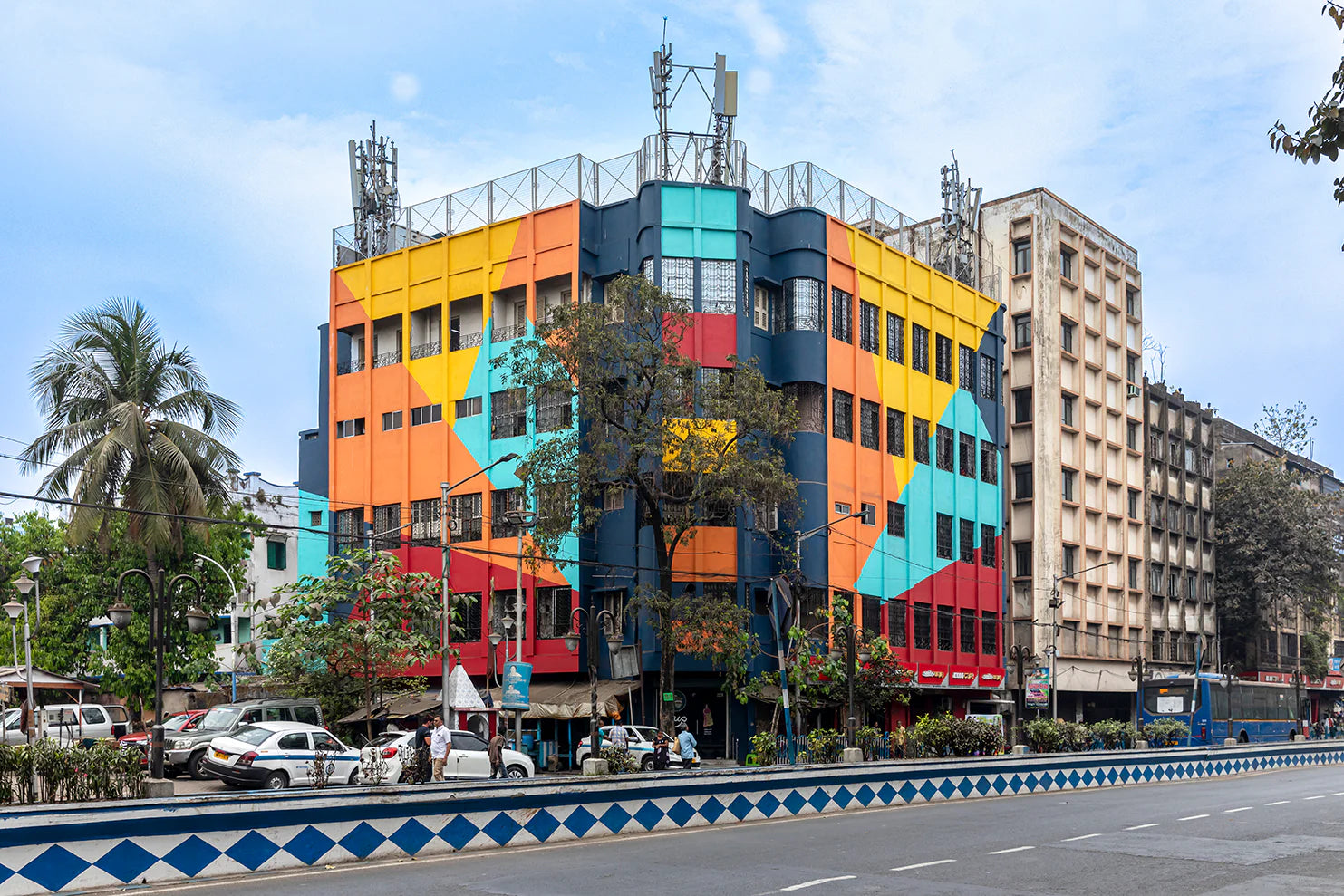
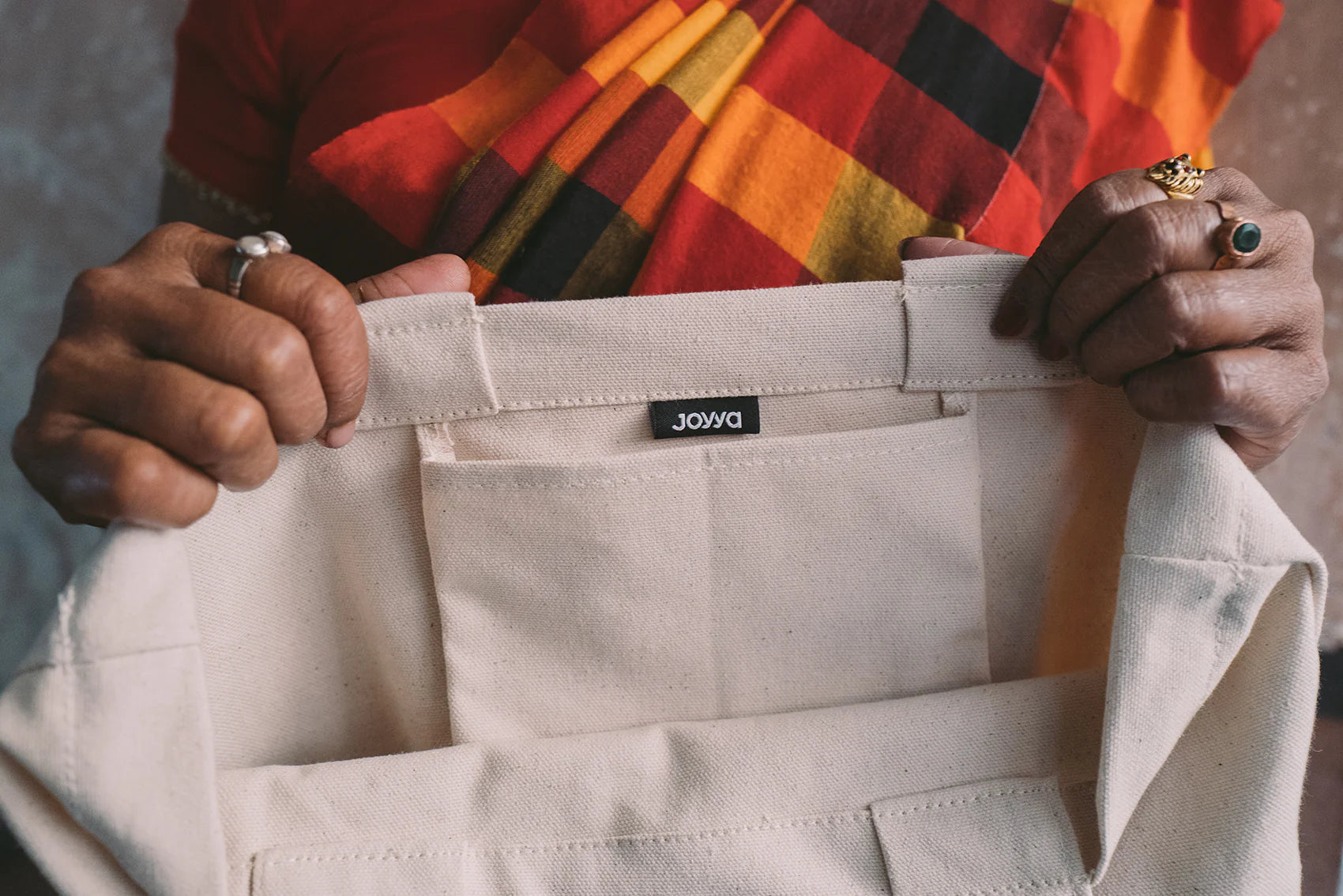
It's been several years since we placed our first order and received small, stylish toiletry bags sewn here, and since then I've wanted to order more, collaborate more closely, visit and hear everything. We look up at the colorful house, are let in by the guard and stand in the middle of a multi-story building with a courtyard in the middle. This is where we'll meet Rahul.
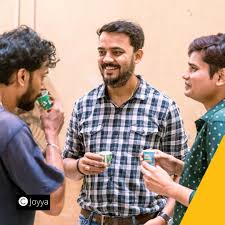
"Kolkata is not for beginners," he laughs when he hears that it is our first visit to India. He talks passionately about his job, about how women from poor backgrounds - often caught up in human trafficking - are helped here to turn their lives around for the better. He talks about living wages for all employees, childcare so that the women can work, training for the staff and courses that people in the surrounding community can sign up for. The beauty courses seem to be popular and they allow women to apply for jobs in beauty salons, but they also have courses where you can learn to read, manage money or, like the course he himself is looking forward to taking when it starts this week; baking.
"Kolkata is not for beginners."
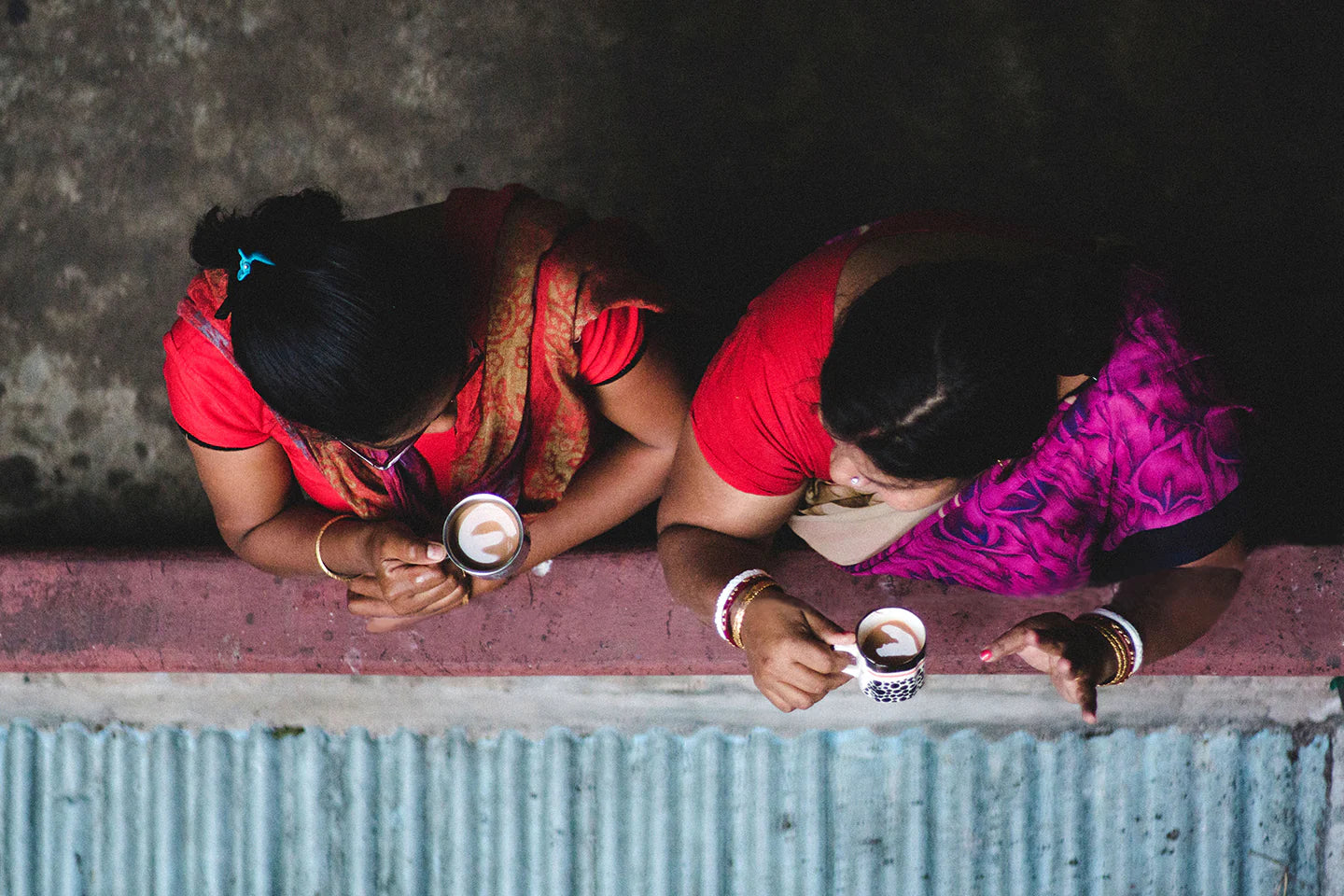
During the pandemic, India was effectively shut down and many were not allowed to go to work, but the women still received their salaries so that no one would be forced to sell their bodies again. Approximately 150 women work at the four different houses that the project runs in Kolkata, designing patterns, printing the motifs and sewing.
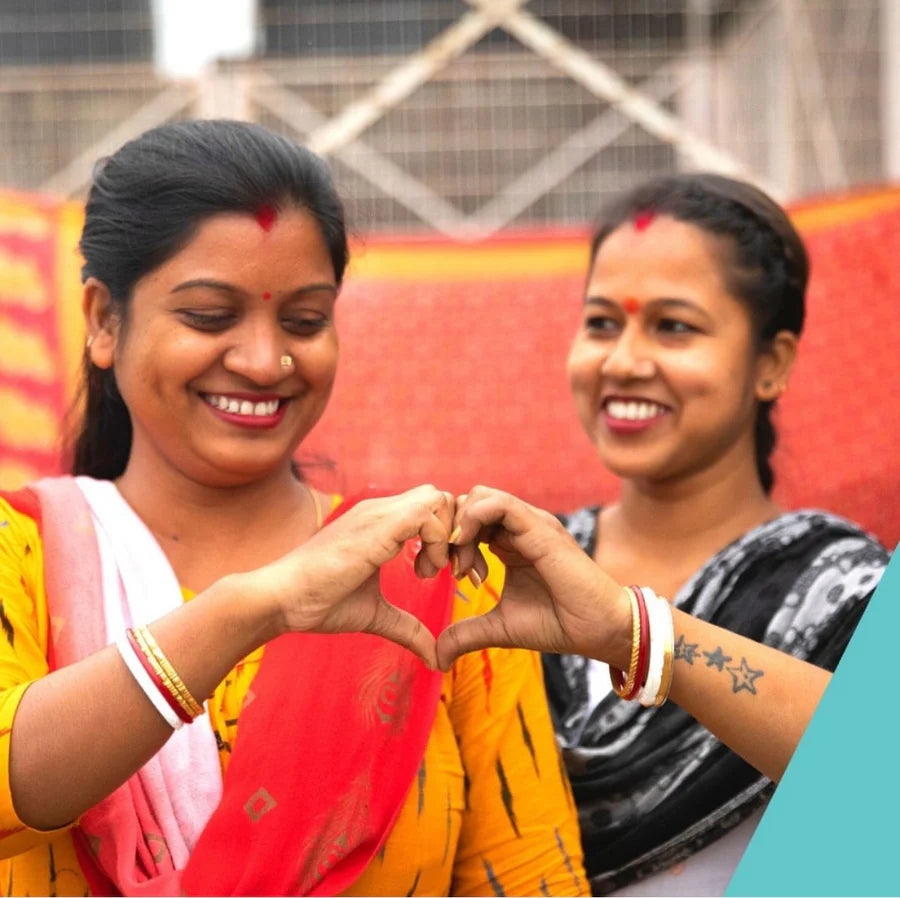
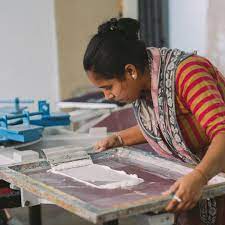
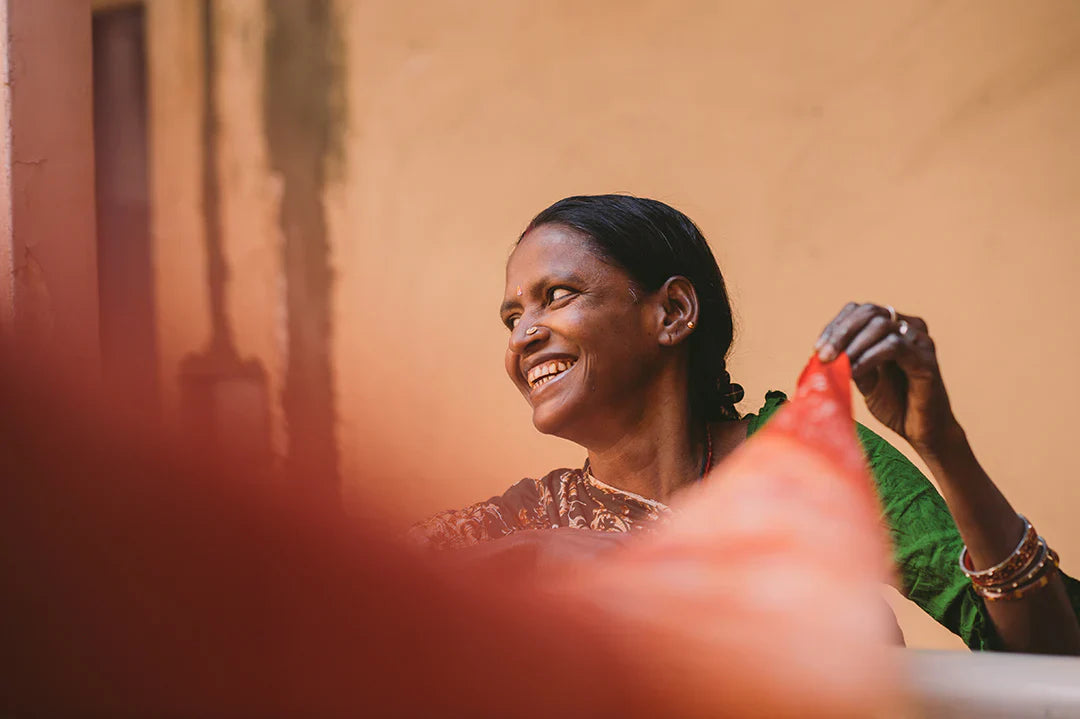
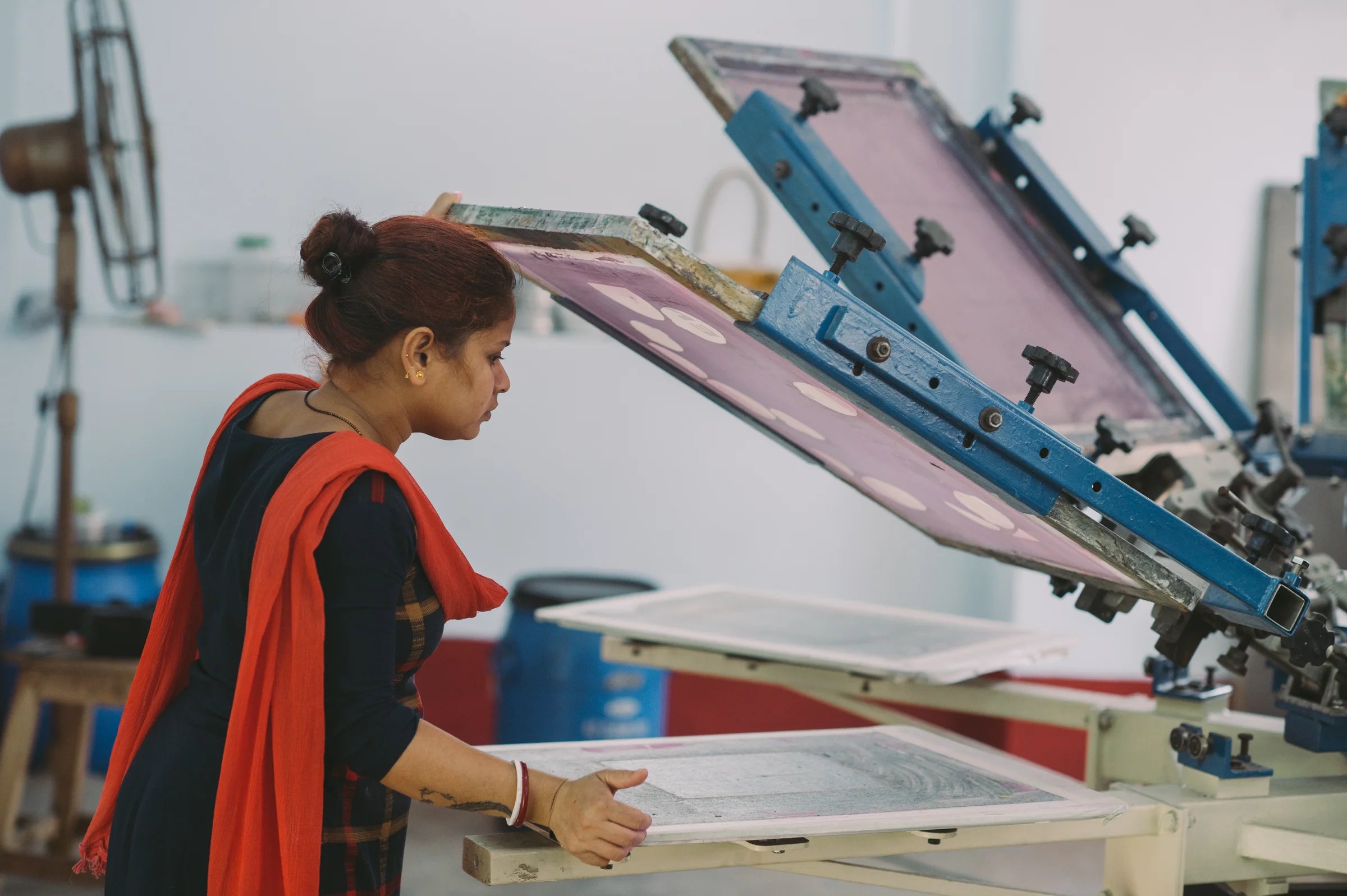
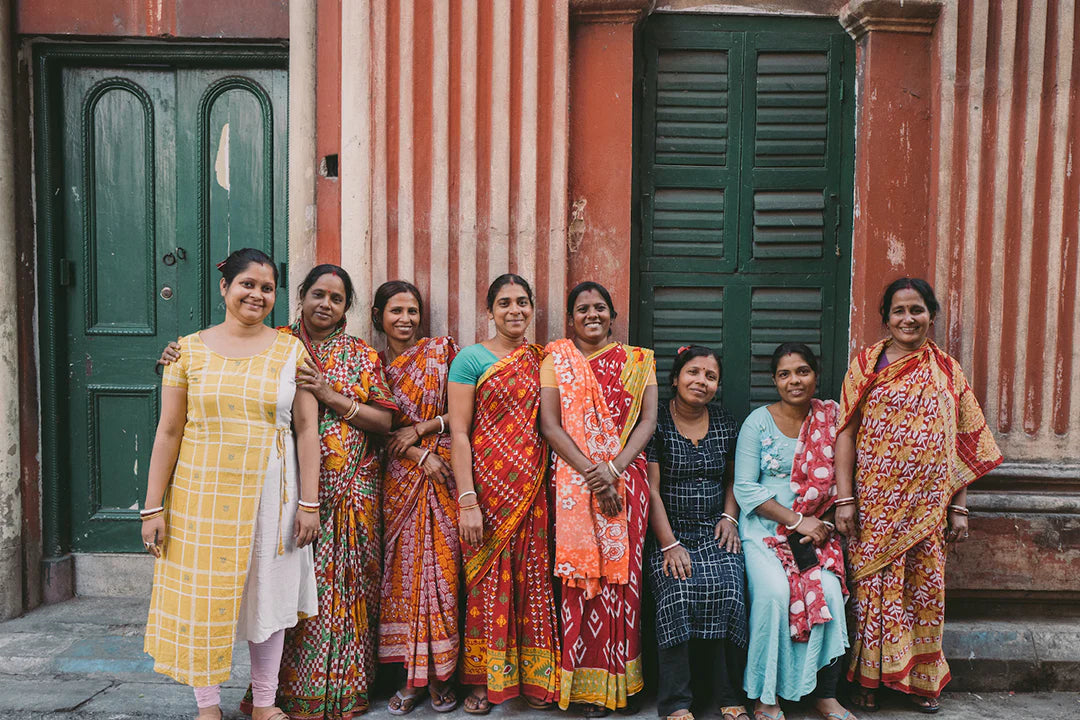
After a moment of easy-going get-to-know-each-other chat and sharp-eyed stitching on samples and previous projects, we walk around and look at the different floors. We meet happy women, dressed in beautiful and colorful saris, who greet us, laugh and chat as they complete the projects they are currently working on. We see how nimble fingers sew details of recycled saris onto fabric bags, we get to take a look at how the cutting is done and see the sewing machines.
A woman brings samples she has worked on and Rahul tells us that both she and her mother were previously caught up in trafficking, but that she came to them when she was relatively young and how she is now a pattern designer and leads a whole team of seamstresses. She has done a great job of developing and adjusting a pattern for us to work from and she really lights up when we praise her. We can never imagine the darkness she has been through, but we see how radiant and free she is today.
"Both she and her mother were slaves in trafficking"
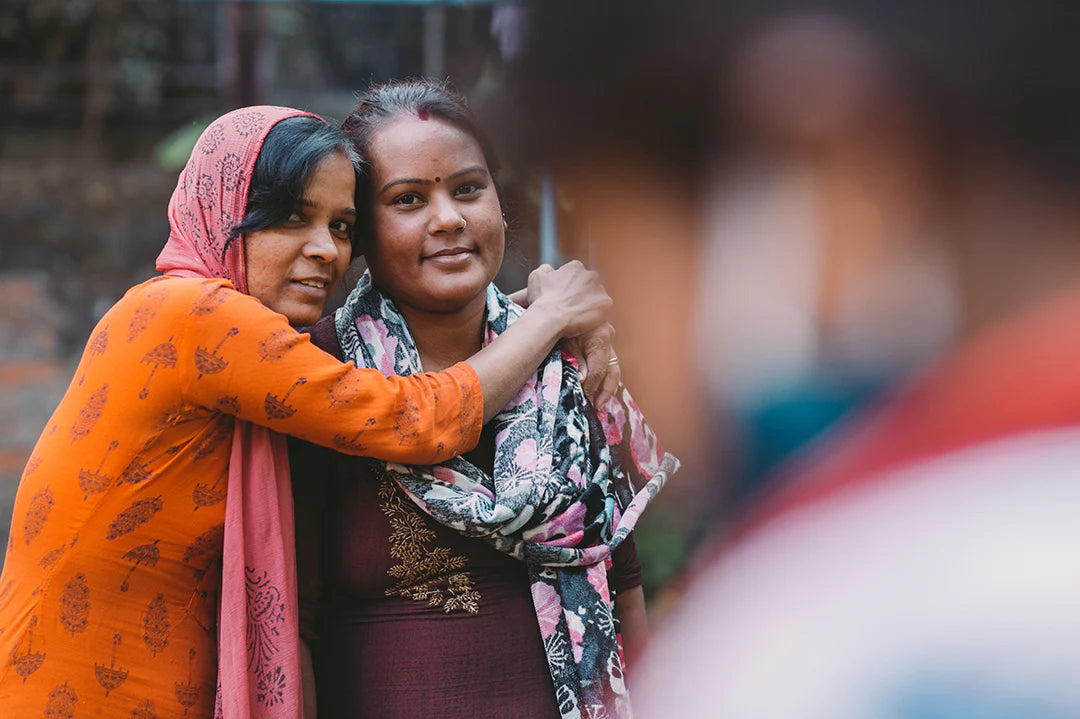
"We're not here to haggle with you or take advantage of you," I tell Rahul. "We're here to hear about lives like hers." He lights up when he sees that we get it. We're there to hook an arm, to order, to sell, to make people in Sweden understand and so that on our next visit we can hear more life stories, hear about how they've been able to hire and help more people.
When we come back out, a small group of people are sitting by the wall of the house just to the left of the gate. They have collected trash - often plastic - so they can light a fire to cook their rice over. In front of our feet are some stray dogs lying half asleep, on the street opposite are homeless people, the traffic is wild and the honking really never ends. A man with a walking style marked by life - as if he were squatting - defies the traffic and makes his way across the street. We barely dare to look. There are no clear lanes, but every car squeezes in where you think there will be room. Somehow he managed to get across without any injuries.
While we wait for our Uber to cruise and honk our horn to take us back to the hotel, I glance warily at the men cooking rice. There is such immense poverty, people are injured inside and out, they beg from us or lie dejected on sidewalks everywhere. Kolkata is a real slap in the face and it is so easy to become paralyzed by all the misery. Where do you even start if you want to do any good?
I turn around and look at the house we just visited. The house with people filled with transformed lives, the house that gives hope, transforms families, and impacts the community around them.
That's where we're going to start. Hope you'll join in.
Quick facts:
Both fabrics and prints are environmentally friendly.
‣ Livable wages for all employees
‣ A work week with hours that respect employees' family life
‣ Professional development and leadership opportunities for all employees
‣ Access to pension and health plans
‣ Health education and therapy
‣ Literacy and money management classes
‣ Childcare
*We meet a missionary who has been in Kolkata for ten years, and she tells us that during the pandemic, when the country largely shut down completely for several months, the environment got a much-needed break and she saw the sky for the first time in ten years.